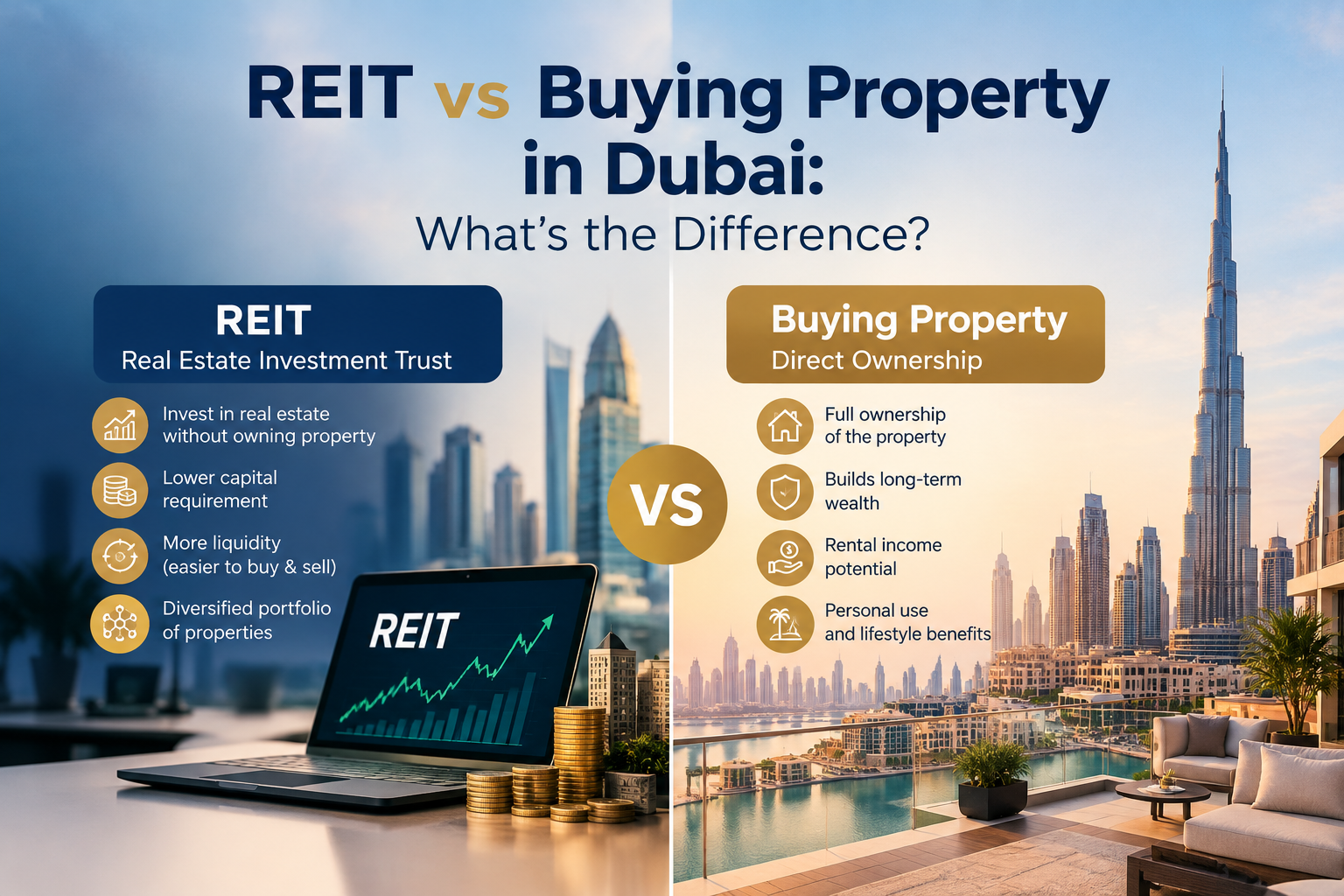
𝗥𝗘𝗜𝗧 𝘃𝘀 𝗕𝘂𝘆𝗶𝗻𝗴 𝗣𝗿𝗼𝗽𝗲𝗿𝘁𝘆 𝗶𝗻 𝗗𝘂𝗯𝗮𝗶: 𝗪𝗵𝗮𝘁’𝘀 𝘁𝗵𝗲 𝗗𝗶𝗳𝗳𝗲𝗿𝗲𝗻𝗰𝗲?
You don’t need millions of dirhams to get exposure to real estate.
But there is an important question to ask first:
𝗗𝗼 𝘆𝗼𝘂 𝘄𝗮𝗻𝘁 𝘁𝗼 𝗶𝗻𝘃𝗲𝘀𝘁 𝗶𝗻 𝗿𝗲𝗮𝗹 𝗲𝘀𝘁𝗮𝘁𝗲, 𝗼𝗿 𝗱𝗼 𝘆𝗼𝘂 𝘄𝗮𝗻𝘁 𝘁𝗼 𝗼𝘄𝗻 𝗮 𝘀𝗽𝗲𝗰𝗶𝗳𝗶𝗰 𝗽𝗿𝗼𝗽𝗲𝗿𝘁𝘆?
These are not the same thing.
One way to get real estate exposure without buying an apartment or villa is through a Real Estate Investment Trust, or REIT. You buy shares in a publicly traded vehicle that invests in income-producing real estate or related assets. However, if you are considering direct property ownership, our Dubai Real Estate Guide 2026 explains key investment strategies, rental yields and factors to consider before investing.
𝗪𝗵𝗮𝘁 𝗜𝘀 𝗮 𝗥𝗘𝗜𝗧?
A Real Estate Investment Trust is an investment vehicle that owns, operates or finances income-producing real estate.
Instead of buying an entire apartment building or office property yourself, you buy shares in the REIT.
The REIT then manages the underlying portfolio and generates income through activities such as rent and property operations. Investors may receive distributions from the income generated by the portfolio, depending on the REIT’s structure and performance.
There are three broad types:
• 𝗘𝗾𝘂𝗶𝘁𝘆 𝗥𝗘𝗜𝗧𝘀: Own and operate income-producing properties.
• 𝗠𝗼𝗿𝘁𝗴𝗮𝗴𝗲 𝗥𝗘𝗜𝗧𝘀: Invest primarily in real estate debt and mortgages.
• 𝗛𝘆𝗯𝗿𝗶𝗱 𝗥𝗘𝗜𝗧𝘀: Combine elements of equity and mortgage REITs.
For someone who wants real estate exposure without managing a physical property, an equity REIT can provide a relatively straightforward way to participate in the sector.
𝗗𝘂𝗯𝗮𝗶 𝗛𝗮𝘀 𝗧𝘄𝗼 𝗥𝗘𝗜𝗧𝘀 𝗟𝗶𝘀𝘁𝗲𝗱 𝗼𝗻 𝗡𝗮𝘀𝗱𝗮𝗾 𝗗𝘂𝗯𝗮𝗶
Dubai’s public market includes two listed REITs: 𝗘𝗺𝗶𝗿𝗮𝘁𝗲𝘀 𝗥𝗘𝗜𝗧 (𝗖𝗘𝗜𝗖) 𝗣𝗟𝗖 and 𝗘𝗡𝗕𝗗 𝗥𝗘𝗜𝗧 (𝗖𝗘𝗜𝗖) 𝗣𝗟𝗖. Both are listed on Nasdaq Dubai.
ENBD REIT provides a useful example of how this model works.
𝗔𝘀 𝗼𝗳 𝟯𝟬 𝗝𝘂𝗻𝗲 𝟮𝟬𝟮𝟲, ENBD REIT reported:
Property portfolio value: 𝗨𝗦𝗗 𝟰𝟯𝟰 𝗺𝗶𝗹𝗹𝗶𝗼𝗻
Net Asset Value: 𝗨𝗦𝗗 𝟮𝟲𝟯 𝗺𝗶𝗹𝗹𝗶𝗼𝗻
NAV per share: 𝗨𝗦𝗗 𝟭.𝟬𝟱
Portfolio occupancy: 𝟵𝟱%
Loan-to-value: 𝟰𝟭%
10 properties in the portfolio
Portfolio allocation: 𝟳𝟭% 𝗼𝗳𝗳𝗶𝗰𝗲, 𝟭𝟰% 𝗿𝗲𝘀𝗶𝗱𝗲𝗻𝘁𝗶𝗮𝗹 𝗮𝗻𝗱 𝟭𝟱% 𝗮𝗹𝘁𝗲𝗿𝗻𝗮𝘁𝗶𝘃𝗲 𝗮𝘀𝘀𝗲𝘁𝘀
These figures also demonstrate an important point about REIT investing.
𝗧𝗵𝗲 𝘃𝗮𝗹𝘂𝗲 𝗼𝗳 𝘁𝗵𝗲 𝘂𝗻𝗱𝗲𝗿𝗹𝘆𝗶𝗻𝗴 𝗽𝗿𝗼𝗽𝗲𝗿𝘁𝘆 𝗽𝗼𝗿𝘁𝗳𝗼𝗹𝗶𝗼 𝗮𝗻𝗱 𝘁𝗵𝗲 𝗺𝗮𝗿𝗸𝗲𝘁 𝘃𝗮𝗹𝘂𝗲 𝗼𝗳 𝘁𝗵𝗲 𝗥𝗘𝗜𝗧’𝘀 𝘀𝗵𝗮𝗿𝗲𝘀 𝗮𝗿𝗲 𝗻𝗼𝘁 𝗻𝗲𝗰𝗲𝘀𝘀𝗮𝗿𝗶𝗹𝘆 𝘁𝗵𝗲 𝘀𝗮𝗺𝗲 𝘁𝗵𝗶𝗻𝗴.
ENBD REIT reported a NAV of USD 1.05 per share at 30 June 2026, while its published share price at that date was USD 0.50.
That difference is one of the characteristics investors need to understand when comparing publicly traded REITs with direct property ownership.
𝗥𝗘𝗜𝗧 𝘃𝘀 𝗗𝗶𝗿𝗲𝗰𝘁 𝗣𝗿𝗼𝗽𝗲𝗿𝘁𝘆: 𝗪𝗵𝗮𝘁 𝗔𝗰𝘁𝘂𝗮𝗹𝗹𝘆 𝗖𝗵𝗮𝗻𝗴𝗲𝘀?
The biggest difference isn’t simply the amount of money required.
It is 𝗰𝗼𝗻𝘁𝗿𝗼𝗹.
1. You Choose the Property With Direct Ownership
When you buy a Dubai property directly, you decide:
• Which community to invest in
• Which property to purchase
• The size and layout
• Whether to rent it out
• How to furnish or improve it
• When to sell
With a REIT, those decisions are made by the fund manager according to the REIT’s investment strategy.
Your investment is therefore tied to the performance of the overall portfolio rather than one specific apartment, villa or building.
𝟮. 𝗥𝗘𝗜𝗧𝘀 𝗖𝗮𝗻 𝗕𝗲 𝗠𝗼𝗿𝗲 𝗔𝗰𝗰𝗲𝘀𝘀𝗶𝗯𝗹𝗲
Buying a property generally requires substantially more capital than buying a few publicly traded shares.
A REIT can therefore provide a way to gain exposure to real estate with a much smaller initial investment.
That can be useful for investors who want real estate exposure without committing a large amount of capital to one property.
𝟯. 𝗟𝗶𝗾𝘂𝗶𝗱𝗶𝘁𝘆 𝗪𝗼𝗿𝗸𝘀 𝗗𝗶𝗳𝗳𝗲𝗿𝗲𝗻𝘁𝗹𝘆
Listed REIT shares can generally be bought or sold through the market during trading hours, subject to market liquidity.
Physical property is different.
Selling an apartment or villa usually involves finding a buyer, agreeing on a price, completing the necessary documentation and paying applicable transaction costs.
However, REIT liquidity comes with another factor: market price volatility.
A REIT’s share price can move because of broader financial-market conditions, investor sentiment, interest rates and expectations about future performance.
A physical property does not have a publicly quoted price changing every minute.
That does not mean physical property values cannot fall. It simply means the price movement is less visible on a daily basis.
𝗪𝗵𝗮𝘁 𝗔𝗯𝗼𝘂𝘁 𝗖𝗼𝗻𝘁𝗿𝗼𝗹?
This is where the difference becomes particularly important.
With direct ownership, you have a specific asset. You know where it is, what it is, how much you paid, who rents it, what improvements you want to make and when you want to sell.
With a REIT, you own shares in an investment vehicle whose portfolio is managed according to its investment mandate.
That means you exchange direct control for diversification and professional management.
Neither structure eliminates risk. They simply give you different types of exposure.
𝗪𝗵𝗮𝘁 𝗔𝗯𝗼𝘂𝘁 𝗥𝗲𝘁𝘂𝗿𝗻𝘀?
This is where investors need to be careful.
𝗧𝗵𝗲𝗿𝗲 𝗶𝘀 𝗻𝗼 𝘂𝗻𝗶𝘃𝗲𝗿𝘀𝗮𝗹 𝗮𝗻𝘀𝘄𝗲𝗿 𝘁𝗵𝗮𝘁 𝘀𝗮𝘆𝘀 𝗥𝗘𝗜𝗧𝘀 𝗮𝗹𝘄𝗮𝘆𝘀 𝗼𝘂𝘁𝗽𝗲𝗿𝗳𝗼𝗿𝗺 𝗽𝗿𝗼𝗽𝗲𝗿𝘁𝘆, 𝗼𝗿 𝘁𝗵𝗮𝘁 𝗽𝗵𝘆𝘀𝗶𝗰𝗮𝗹 𝗽𝗿𝗼𝗽𝗲𝗿𝘁𝘆 𝗮𝗹𝘄𝗮𝘆𝘀 𝗽𝗿𝗼𝗱𝘂𝗰𝗲𝘀 𝗯𝗲𝘁𝘁𝗲𝗿 𝗿𝗲𝘁𝘂𝗿𝗻𝘀.
The outcome depends on factors such as:
• Purchase price
• Rental income
• Property appreciation
• REIT share price
• Dividends or distributions
• Financing costs
• Interest rates
• Service charges
• Maintenance
• Transaction costs
• Holding period
• Taxes and other applicable costs
A physical property can appreciate significantly while producing rental income.
A REIT can generate distributions and potentially benefit from appreciation in its underlying assets.
But the investor’s actual return depends on the specific investment and the price paid.
𝗪𝗵𝗮𝘁 𝗗𝗶𝗿𝗲𝗰𝘁 𝗣𝗿𝗼𝗽𝗲𝗿𝘁𝘆 𝗢𝘄𝗻𝗲𝗿𝘀𝗵𝗶𝗽 𝗚𝗶𝘃𝗲𝘀 𝗬𝗼𝘂 𝗶𝗻 𝗗𝘂𝗯𝗮𝗶
Dubai also has an important feature for international property investors.
Foreign ownership is permitted in designated freehold areas, subject to Dubai’s applicable regulations. Dubai Land Department states that foreign ownership is available in freehold areas designated under the relevant regulations.
Those areas include well-known locations such as Downtown Dubai, Business Bay, Dubai Marina, Palm Jumeirah and Jumeirah Lakes Towers, among others.
That means an investor can choose a specific property and gain direct exposure to a particular Dubai community rather than owning a share of a diversified portfolio.
And that distinction matters.
An investor choosing Downtown Dubai is making a different investment decision from someone buying shares in a REIT with a portfolio dominated by offices.
𝗦𝗼 𝗪𝗵𝗶𝗰𝗵 𝗢𝗻𝗲 𝗦𝗵𝗼𝘂𝗹𝗱 𝗬𝗼𝘂 𝗖𝗵𝗼𝗼𝘀𝗲?
There isn’t one answer for everyone.
A 𝗥𝗘𝗜𝗧 may be relevant if you want:
• A smaller entry point
• Portfolio-level real estate exposure
• Professional management
• Easier market liquidity
• Exposure to multiple properties rather than one asset
𝗗𝗶𝗿𝗲𝗰𝘁 𝗽𝗿𝗼𝗽𝗲𝗿𝘁𝘆 𝗼𝘄𝗻𝗲𝗿𝘀𝗵𝗶𝗽 may be relevant if you want:
• Control over a specific property
• Direct rental income from that property
• Choice of location and unit
• The ability to renovate or furnish the property
• Potential personal use
• Direct exposure to a particular Dubai community
The important thing is to understand that a 𝗥𝗘𝗜𝗧 𝗶𝘀𝗻’𝘁 𝗮 𝗰𝗵𝗲𝗮𝗽𝗲𝗿 𝘃𝗲𝗿𝘀𝗶𝗼𝗻 𝗼𝗳 𝗼𝘄𝗻𝗶𝗻𝗴 𝗮𝗻 𝗮𝗽𝗮𝗿𝘁𝗺𝗲𝗻𝘁.
It is a different investment structure.
The Real Question Isn’t REIT or Property
The better question is:
What do you actually want from your real estate investment?
If your priority is relatively hands-off exposure to a portfolio of real estate assets, a REIT may fit that objective.
If you want to choose the location, select the property, manage the asset and have direct ownership of a specific apartment, villa or commercial unit, direct property investment is a different proposition.
Dubai gives investors access to both routes.
The right comparison isn’t simply 𝗥𝗘𝗜𝗧 𝘃𝘀 𝗽𝗿𝗼𝗽𝗲𝗿𝘁𝘆.
It’s portfolio exposure vs direct ownership, liquidity vs control, and diversification vs choosing the asset yourself.
And before making either decision, investors should evaluate the specific investment, its costs, risks, financing and expected income rather than assuming that one structure will automatically outperform the other.