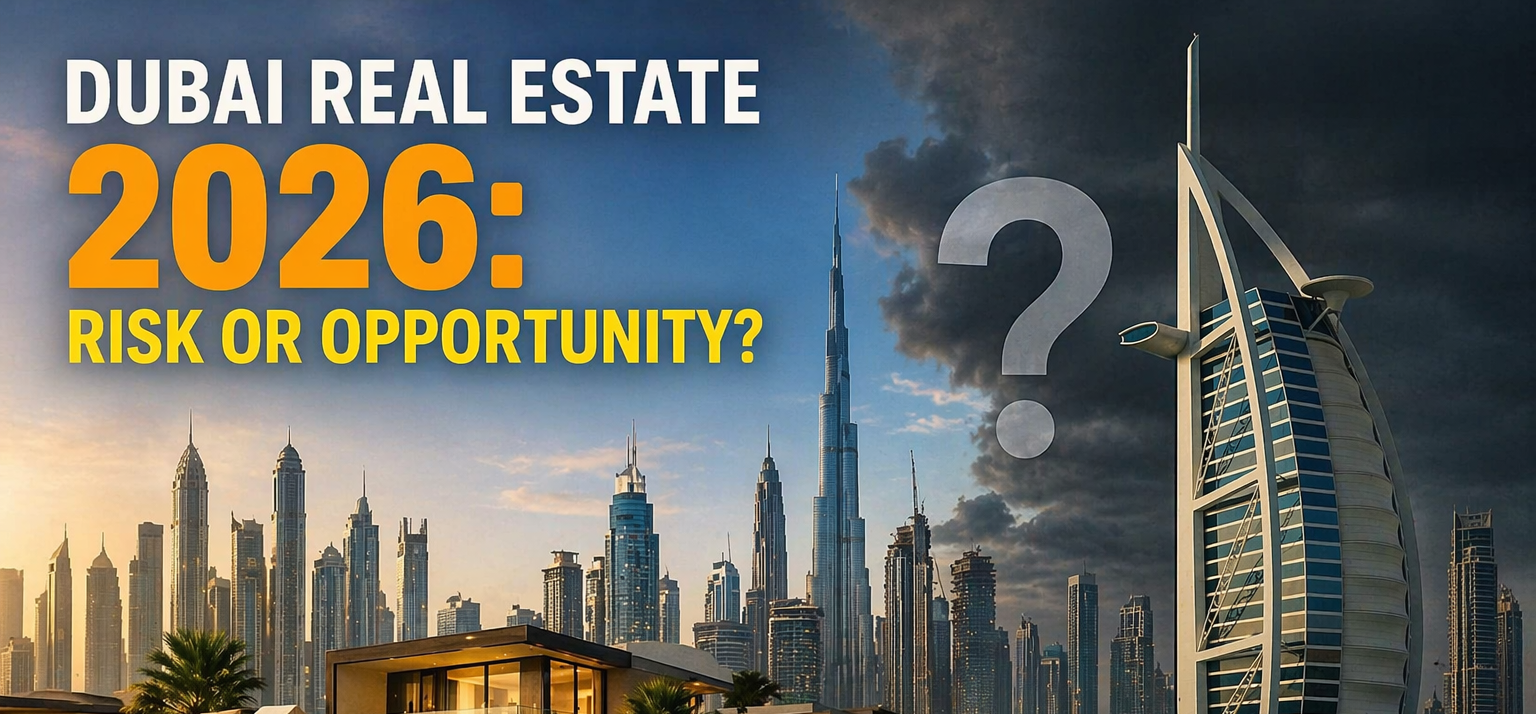
Dubai’s property market in 2026 is no longer driven purely by hype or short-term speculation. The city has evolved into a mature global real estate destination backed by strong demand, transparent regulations, large-scale infrastructure growth, and increasing international investor confidence.
For anyone considering buying property in Dubai today, the key question is not simply whether the market is performing well. The more important question is whether you are investing in the right type of property, in the right location, with long-term value in mind.
Recent market figures show why Dubai continues to attract global investors. According to the latest Dubai Land Department Annual Report, Dubai recorded over 226,000 real estate transactions worth AED 761 billion in 2024. Investor participation also surged, with over 110,000 new investors entering the market. At the same time, rental demand remained exceptionally strong, supported by population growth, business expansion, tourism, and long-term residency programs.
These are not signs of a temporary boom. They reflect a market supported by genuine demand and long-term economic planning.
Dubai Property Market Overview in 2026
Dubai entered 2026 from a position of strength rather than correction. The market continues to benefit from high liquidity, strong investor activity, and growing confidence among both end-users and international buyers.
According to Dubai Land Department reports, 2024 became one of the strongest years in the emirate’s real estate history. Transaction activity reached record levels while investment values continued to rise across residential, commercial, and off-plan sectors.
Rental performance also remained healthy. In 2025, tenancy contracts crossed 1.38 million with total rental values exceeding AED 126 billion. This reflects deep housing demand and a growing resident population.
Dubai’s long-term development initiatives such as the D33 Economic Agenda and Urban Plan 2040 continue to support infrastructure growth, business expansion, and population inflow. These factors are helping strengthen the city’s position as one of the world’s most attractive real estate investment destinations.
Another major attraction for investors is rental yield. Dubai continues to offer average rental returns between 6% and 8%, significantly higher than many established global cities.
Will Dubai Property Prices Decline?
One concern many buyers have today is whether property prices could slow down or decline after several years of rapid growth.
While price growth may moderate in certain locations or property categories, the current market does not reflect the characteristics of a weak or unstable cycle. Demand remains active, rental performance is healthy, and investor participation continues to grow.
Dubai today is very different from previous speculative periods. Regulations are stronger, financing structures are healthier, and the market is supported by real end-user demand.
Rather than trying to perfectly time the market, investors should focus on selecting high-quality assets with long-term appeal. In most cases, the right location, trusted developer, and strong community fundamentals matter more than short-term price fluctuations.
The smarter approach is not waiting endlessly for a market dip. It is identifying assets that can continue performing even if price growth becomes more balanced over time.
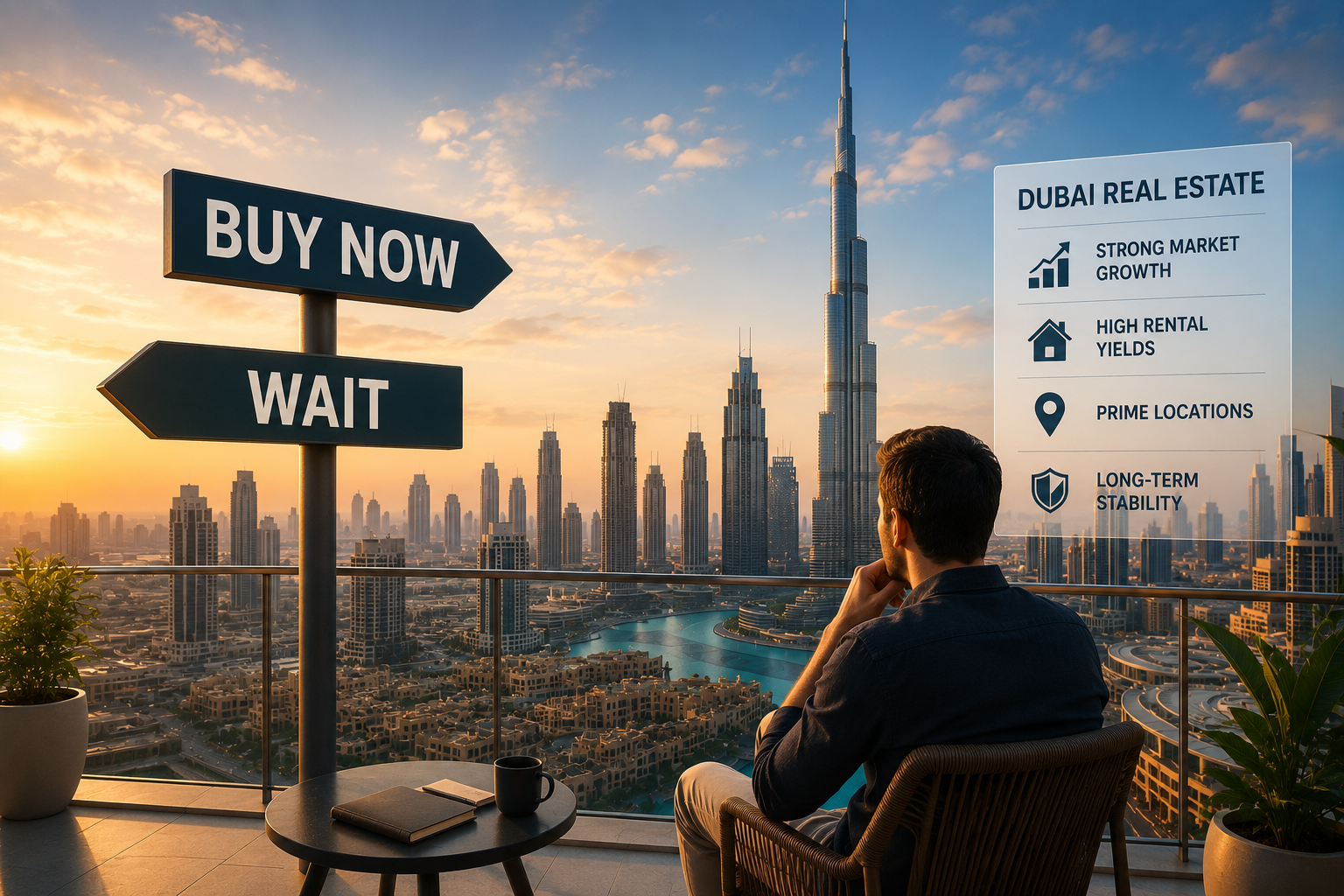
Should You Buy Property in Dubai Now or Wait?
There is no perfect entry point in real estate. The best time to invest depends largely on your investment objective.
If your goal is capital appreciation, entering early into strong off-plan developments can still provide meaningful upside potential. Buyers who entered selected projects between 2021 and 2024 benefited significantly from both resale growth and market appreciation.
For investors prioritizing rental income, established communities with strong tenant demand continue to perform well. Areas connected to business districts, lifestyle destinations, schools, and transport infrastructure remain highly attractive.
For long-term wealth preservation, Dubai offers additional advantages beyond property appreciation. The city provides a stable tax-friendly environment, strong currency positioning through the AED’s USD peg, modern infrastructure, and increasing global mobility opportunities.
In many cases, waiting may simply result in paying more later for the same quality asset if demand continues rising.
Is Dubai Real Estate a Safe Investment?
Safety in property investment does not mean prices never fluctuate. A safe market is one supported by clear regulations, efficient systems, investor transparency, economic growth, and consistent demand.
Dubai continues to strengthen its real estate ecosystem through digital transformation, investor-friendly regulations, and stronger governance frameworks. The city’s property market has become increasingly institutional and globally recognized.
The rental sector also adds another layer of security. Strong occupancy rates and rising tenancy values demonstrate sustained demand from residents, professionals, and international businesses relocating to Dubai.
For investors seeking long-term stability, Dubai offers a combination of:
- Strong economic growth
- Global connectivity
- Investor-friendly regulations
- High rental demand
- Tax efficiency
- Long-term infrastructure planning
These fundamentals continue to support confidence in the market.
Dubai Rental Yields and Investment Returns
One of the biggest reasons investors continue to enter Dubai real estate is the city’s attractive return potential.
Compared to many mature global property markets, Dubai still offers strong rental yields alongside capital appreciation opportunities.
Different property categories appeal to different investment strategies:
- Waterfront and luxury developments often attract premium buyers and long-term capital appreciation.
- Integrated family communities tend to provide more stable occupancy and consistent rental demand.
- Early-stage off-plan projects can offer lower entry pricing and future upside potential.
For many international investors, the attraction is not only the rental return. It is the combination of income generation, asset appreciation, and wealth protection through a globally connected market.
Best Areas to Consider in Dubai
Location remains one of the most important factors in real estate performance.
Communities with strong infrastructure, lifestyle appeal, accessibility, and long-term development plans are likely to remain attractive to both investors and residents.
Areas connected to business hubs, waterfront developments, master-planned communities, and lifestyle-focused destinations continue to see strong demand.
Investors should focus on locations that offer:
- Strong rental demand
- Future infrastructure growth
- Community development
- Accessibility
- Lifestyle appeal
- Long-term resale potential
Choosing the right area often has a bigger impact on long-term returns than trying to predict short-term market cycles.
Rising Construction Costs Could Support Future Property Prices
Another major trend shaping Dubai’s real estate market in 2026 is the sharp increase in construction material costs across the UAE.
Recent market data shows significant price increases in key building materials:
- Steel prices increased from AED 2,150 to AED 3,000 per ton
- Cement prices rose from AED 11 to AED 15 per bag
- Regular concrete increased by more than 50%
- Hollow block pricing jumped nearly 57%
- Pump costs surged more than 120%
These rising construction costs matter because they directly affect future project pricing and overall development expenses.
As developers face higher material and execution costs, future launches may enter the market at higher prices, especially in premium locations and master-planned communities.
For investors, this creates an important advantage for early entry buyers. Properties secured today may benefit not only from market appreciation and rental demand, but also from increasing replacement costs over time.
In simple terms, waiting for lower prices may not always work in a market where the cost of building continues to rise.
What Investors Should Watch in 2026
Several indicators suggest Dubai’s property market remains fundamentally strong:
- High transaction activity continues across multiple property segments.
- Investor participation remains elevated with growing international demand.
- Rental values and tenancy contracts continue to rise.
- Infrastructure development and new project launches remain active.
- Government-led economic initiatives continue supporting long-term growth.
These are signs of a market with strong structural support rather than short-term speculation.
Investors looking to better understand market trends, communities, and investment strategies can also explore our complete Dubai Real Estate Guide 2026
Common Mistakes Investors Make
One of the biggest mistakes buyers make is waiting endlessly for the “perfect” market correction.
Another common mistake is focusing only on launch prices instead of evaluating:
- Developer credibility
- Community quality
- Exit liquidity
- Long-term demand
- Construction progress
- Payment structure
Not all projects perform equally, even within a strong market.
Successful investors usually focus on long-term fundamentals instead of short-term market noise.
Final Thoughts
So, is 2026 a good time to buy property in Dubai?
Based on current market performance, strong rental demand, increasing investor activity, and Dubai’s long-term economic vision, the market continues to present compelling opportunities for both investors and end-users.
Dubai today is not simply a fast-growing property market. It is becoming a globally established investment destination supported by infrastructure, regulation, international connectivity, and long-term urban planning.
For buyers who focus on quality assets, strong locations, and long-term strategy, Dubai real estate continues to offer attractive potential for income generation, wealth preservation, and future growth.
If you are considering investing in Dubai property, the smartest approach is selective investing backed by research, timing, and long-term vision rather than speculation.
Explore the latest opportunities on Metromax Realtors and discover projects aligned with your investment goals.